
To Raglan

I finished my last post with a visit to Pouto Point, on the Kaipara Harbour. It’s actually the beginning of New Zealand’s longest beach - no, not the much more famous 90 mile beach, which is a mere 88 kilometres long. Ripiro Beach starts at the north head of the Kaipara Harbour, runs for 107 km, and is driveable within a couple of hours of low tide for its entire length (subject to not getting stuck in a soft bit). In fact, when I was a kid, living in Pouto, every so often Dad would take an overnight trip up the beach to do something he ought not to have in relation to toheroa - shellfish that could grow as large as a hand, and now close to extinction.
My brother lives at Bayleys Beach, near the top end of Ripiro, so we drive on for a quick look - it’s odd to find speed limit signs on a beach, but it is legally a road. The next two photos are taken from the same place - the only difference is that I’ve zoomed out in the second, so you can get a sense of the scale of the beach - you can’t even see the car lights in the first photo.


When I leave my brother’s, I’m in no hurry so explore a couple of beaches on the Kaipara Harbour - the first is Tinopai - a small beachside settlement of about 240 people, with a complete absence of any sort of commercial activity: not even a coffee cart. This sort of beach, to me, is more appealong than Ripiro because it’s much smaller and more varied.
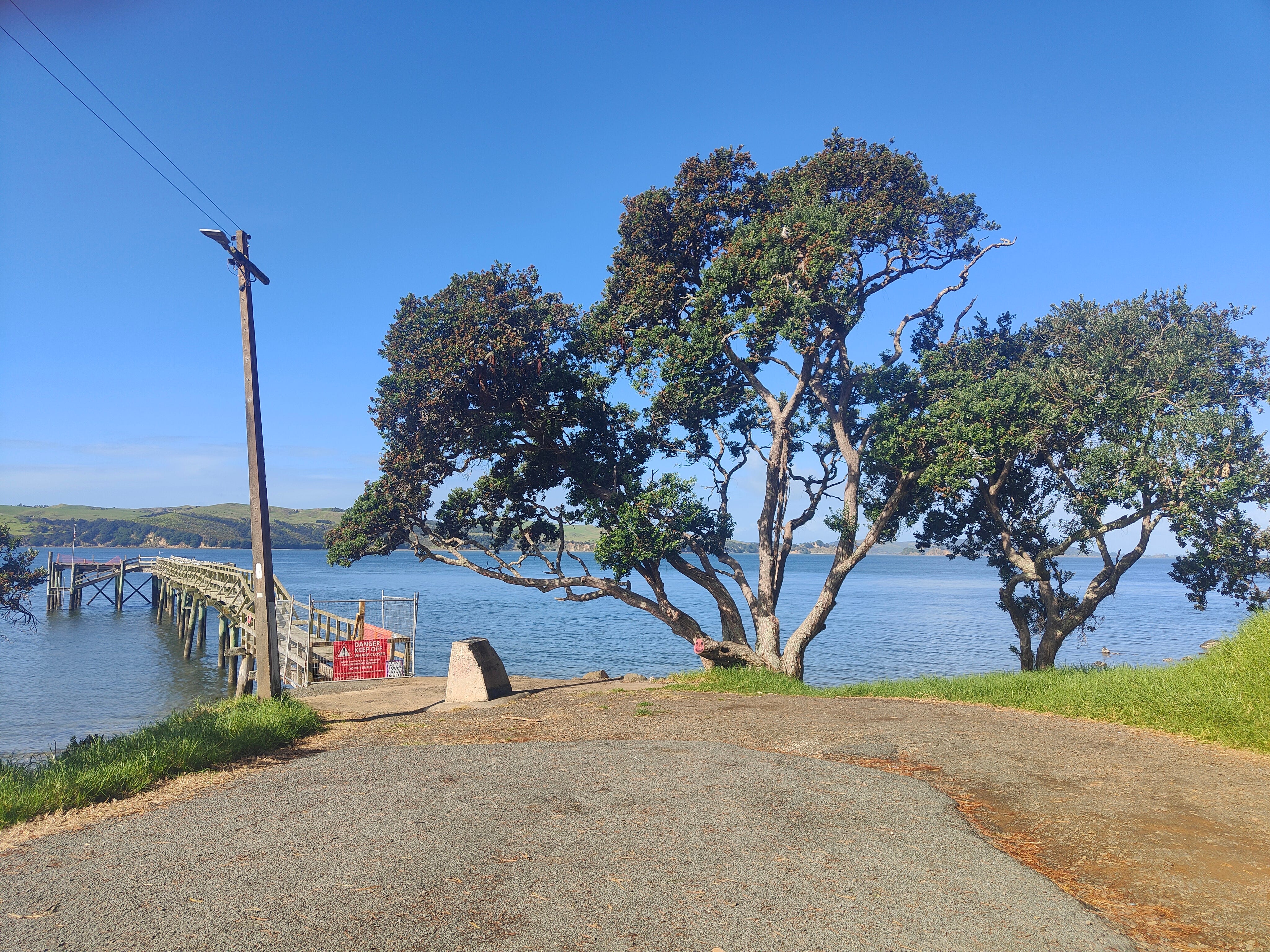
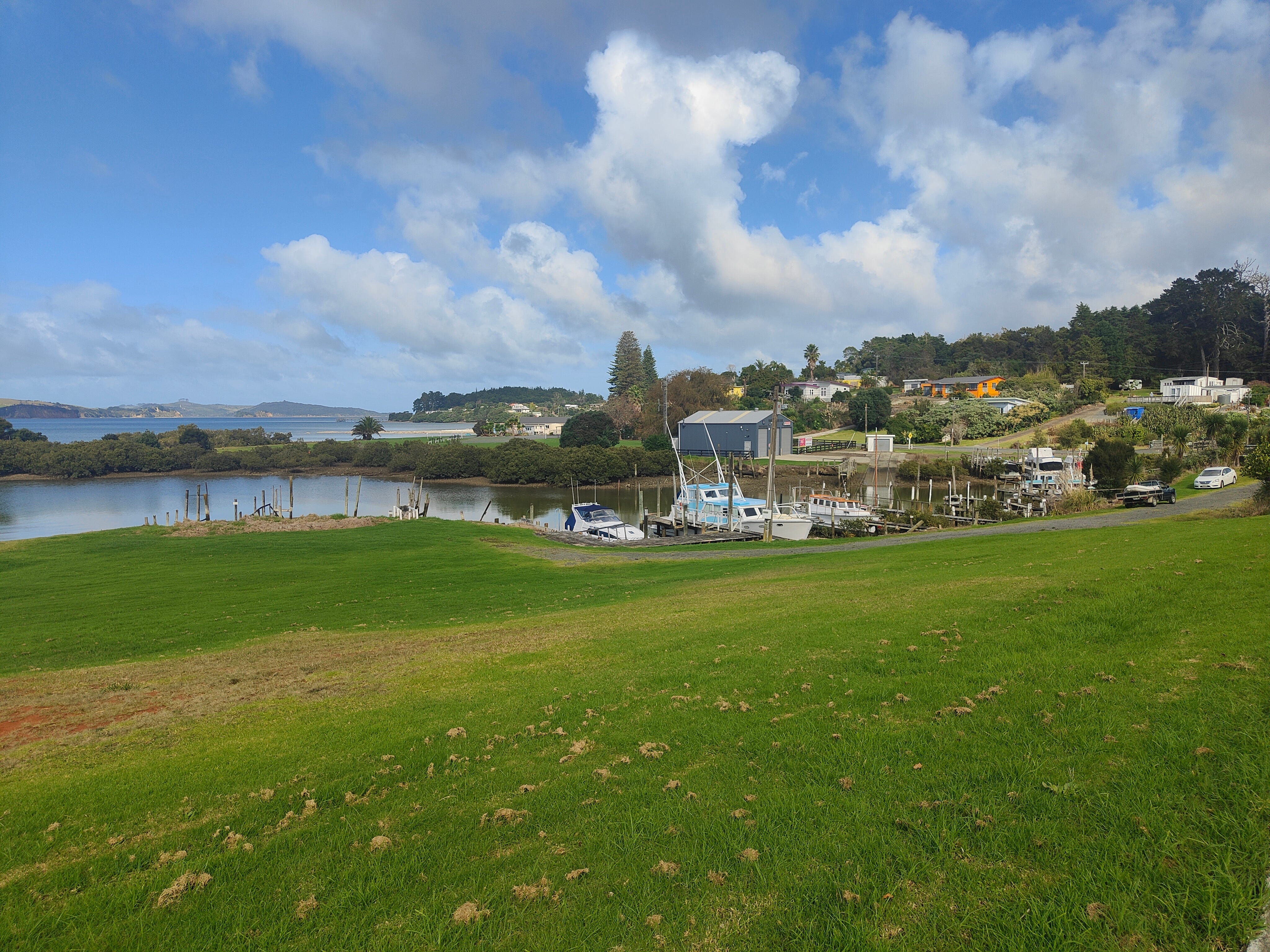
When Europeans first settled the Kaitpara area, there was a lot of native forest - kauri trees in particular, which were valued for their straigtness, height and volume. There was a flourishing timber industry here, made possible because of the water access. Just up the road from Tinopai at Matakohe is a fairly major museum which celebrates this history: I’ve been in a couple of time, so don’t go in, but I do pause to wander around the area.
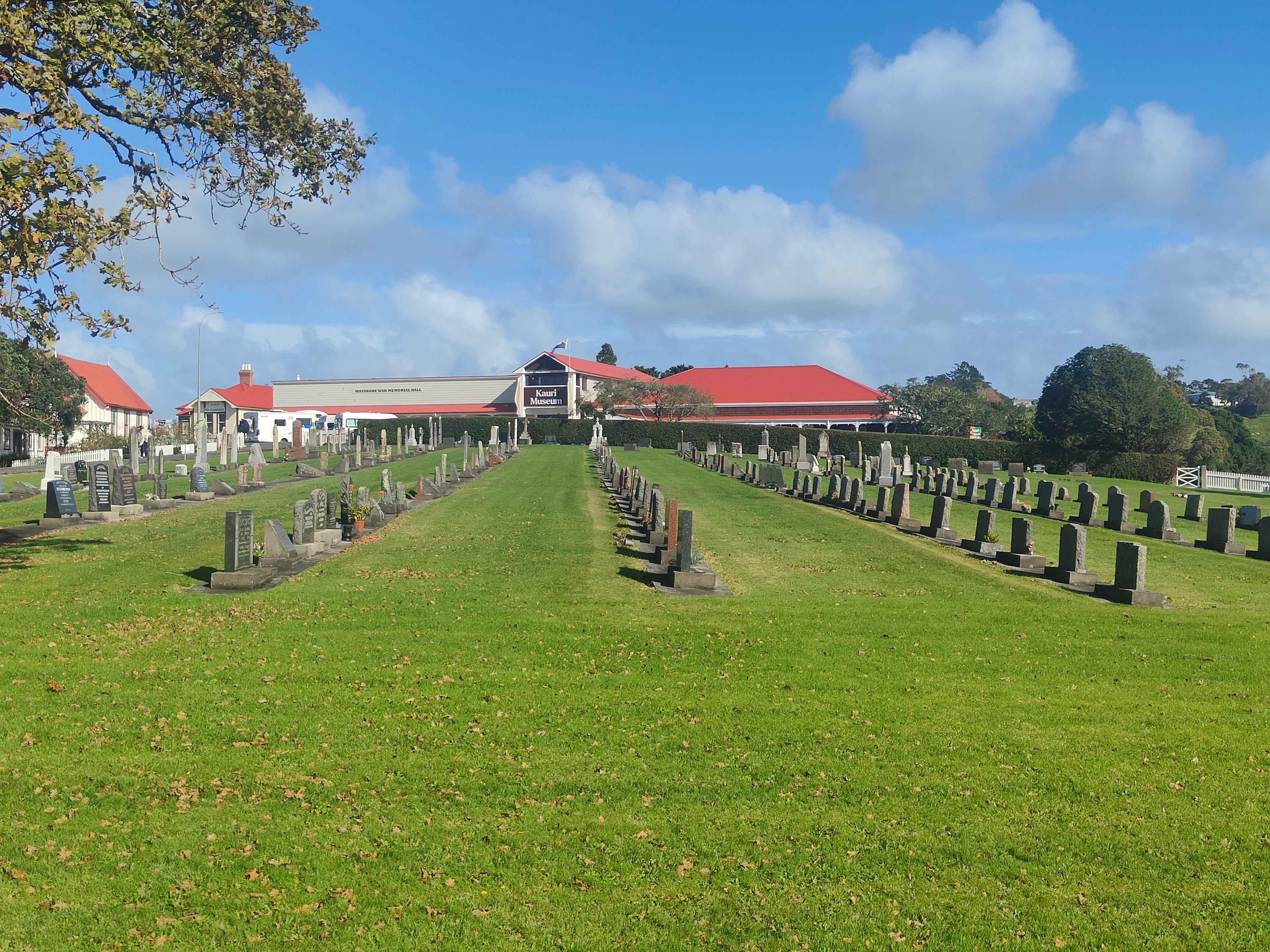


The first European settlers at Matakohe were part of a religious group called the Albertlanders (honouring Prince Albert) who arrived in the area in 1862. They also had a coastal settlement a few km away, called Pahi. It’s slightly bigger than Tinopai with 290 residents and a small shop, although the hotel is no longer operating. It seems there were either no Māori occupants or, unlike other nearby places, those who were there did not resist these settlements.


Back on the main road, I make a brief stop in Warkworth to pick up a bratwurst. After that, I head for Raglan - a major town compared to the places I’ve been, with around 3,900 residents. My brother and I watched a youtube video of a travelling couple exploring: they find places I don’t recall ever seeing, so I make Raglan my next destination. I should perhaps have used my own knowledge rather than relying on Google maps to get me there, as it puts me on some hairy roads. One of them leads to a café which received a bit of publicity a while ago because of its remoteness.


I do manage to get to Raglan before the holiday park closes, and go in to town to see what my dinner options will be. There’s a nice looking pizza place but when I see Ulo’s Kitchen, I can’t resist - although I do have to ask what sort of food they make (Japanese).
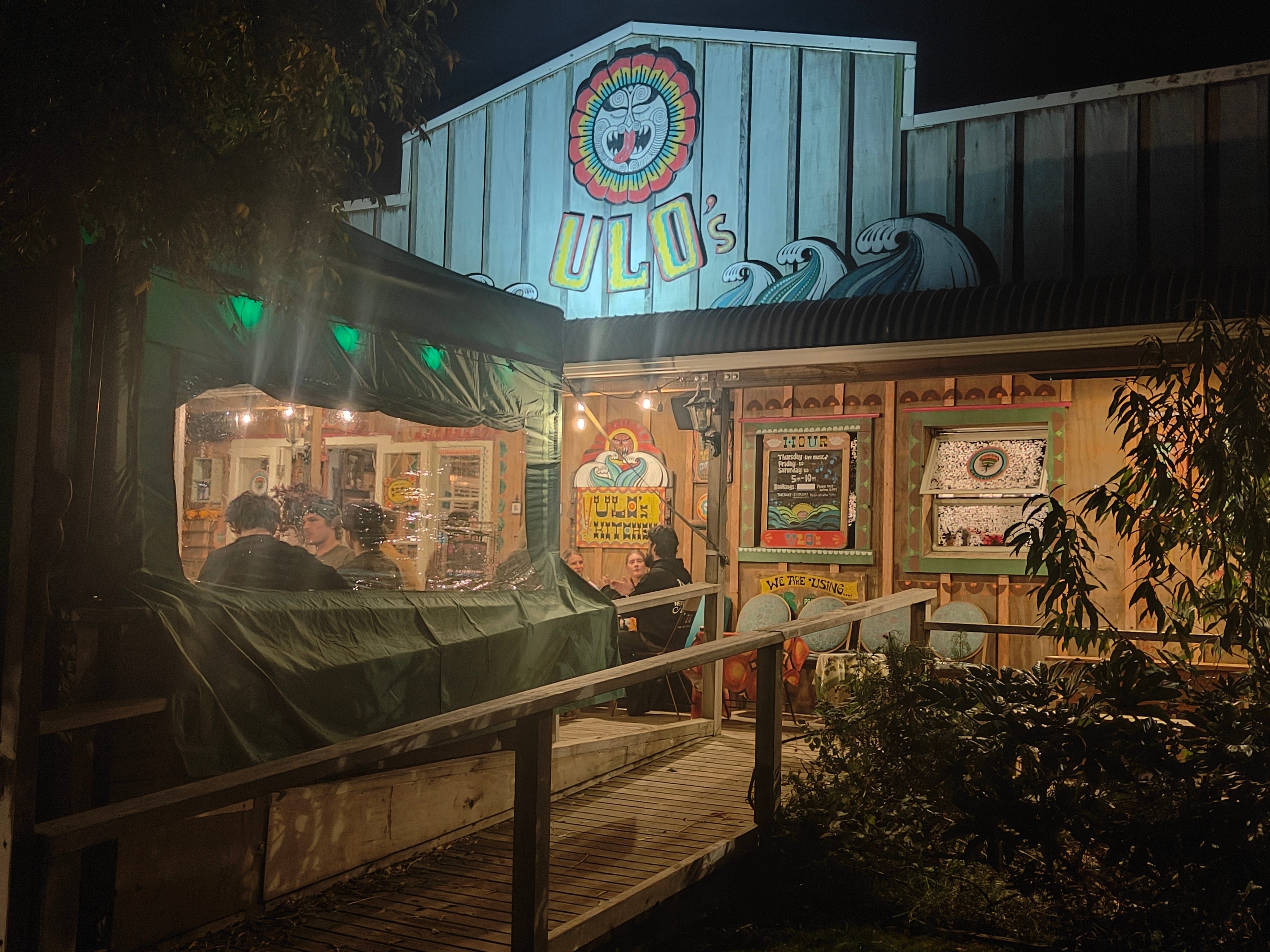


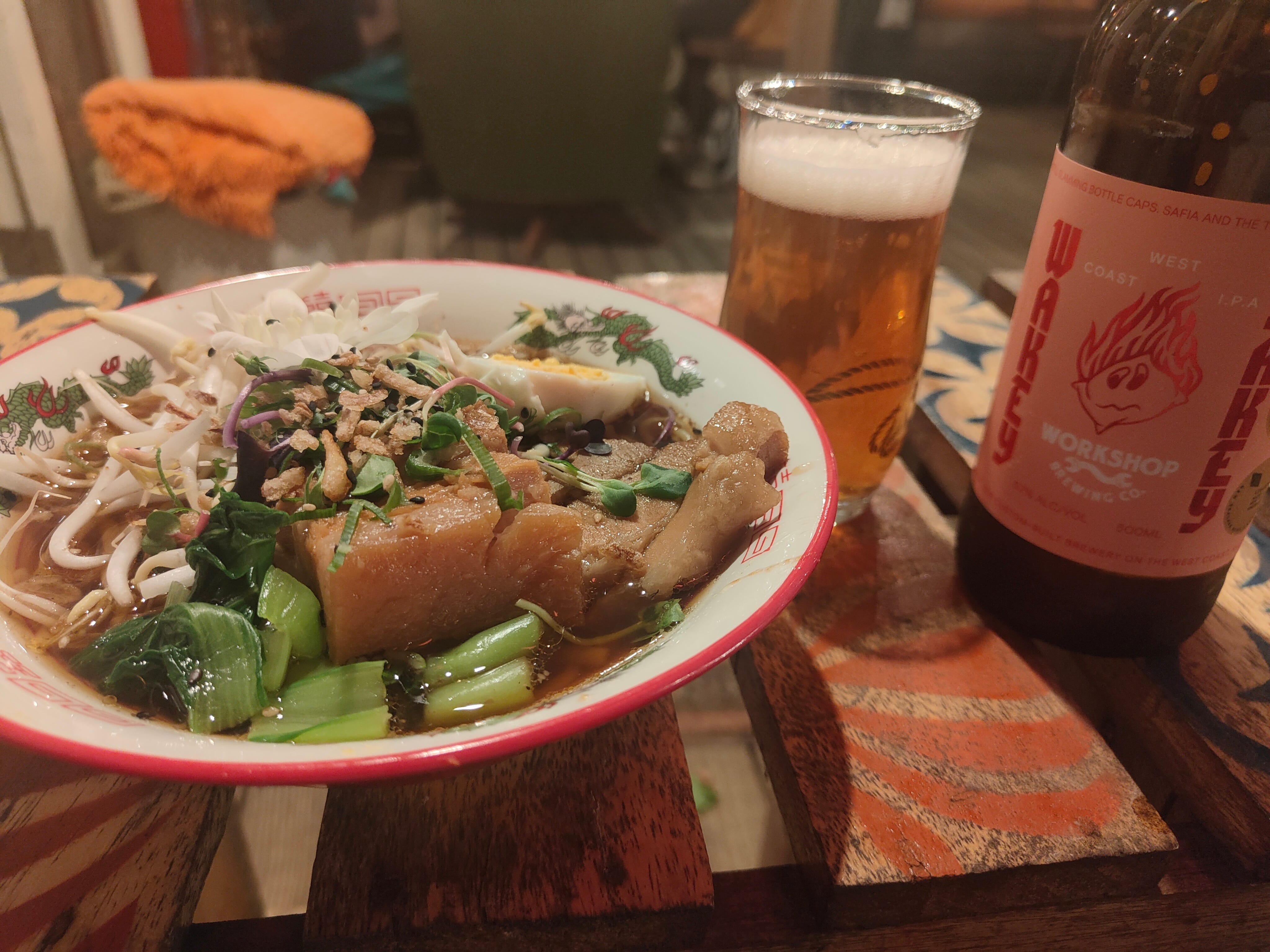
This is their version of ramen - pretty good apart from an extreme overload of bean sprouts, the flavour of which dominates. I have a tasy West Coast IPA from local brewery Workshop on the side. In the morning, I wander around town for a bit, grabbing a couple of coffees as I go. I find the areas featured in the video - essentially they are just a couple of arcades running off a side street.
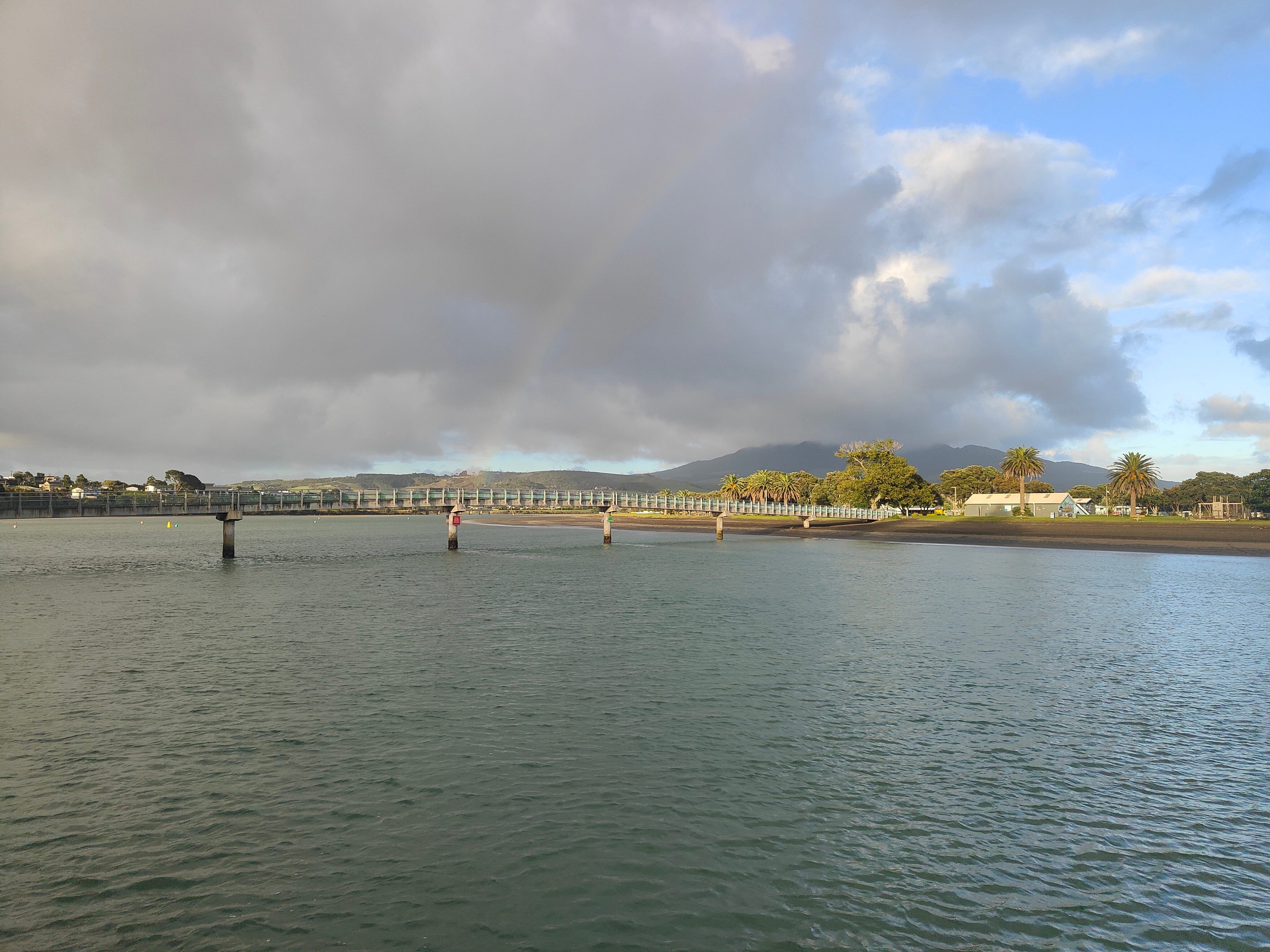


Town might be fairly quiet, but I learn that it’s going to be much busier next weekend: Raglan Roast is going to be setting up four mobile coffee shops on the beach. Raglan’s claim to fame is as a surf town, and the surfers are about to hit it hard, for the World Surf League is having a championship event here. There will be 36 of the world’s best surfers and about 6,000 folk coming to watch thrm. [I have a footnote: the finals were interrupted when a photographer was bitten by a sea lion.]
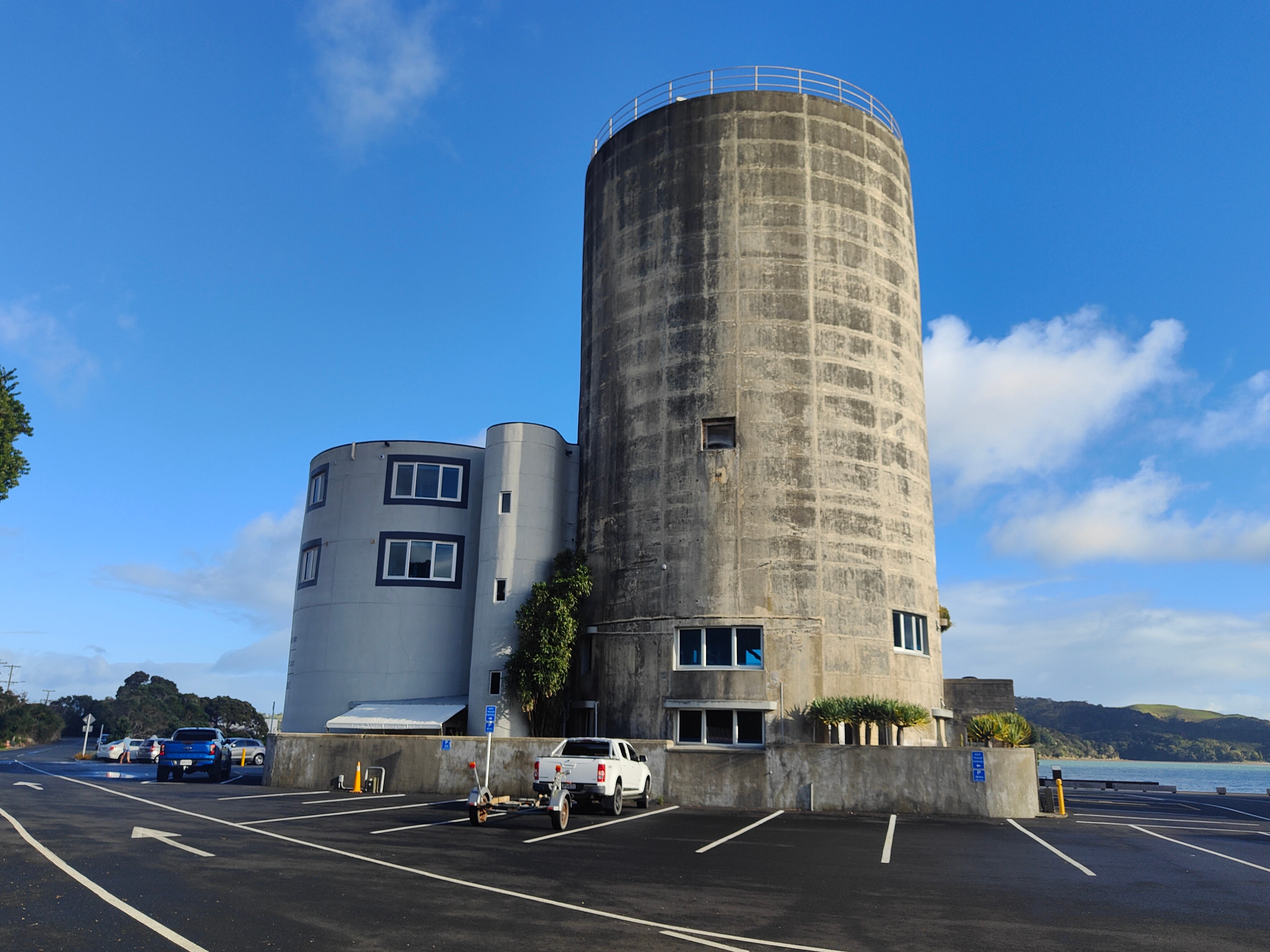
Before leaving Raglan, I pop out to the wharf to see what’s going on - there was a major fire here in 2010, but it’s been rebuilt, with a few shops (including a fish and chippery) and the old cement silos which have found a new life as apartments. Prices start at $270 a night, which isn’t too bad.
Time to hit the road: I’ve arranged a Mother’s Day lunch for my other brother’s wife and their family, more than two hours away.
Cheers!